Ottolenghi’s Green Pancakes with Lime Butter

Tags

, , , , , , ,

pancakes01

I have seldom posted a recipe that wasn’t my own on this blog, but I am making an exception. I feel comfortable doing so because A) this recipe already appeared in print in the London Times in 2008; and B) I am posting it entirely to encourage you to buy the author’s cookbook, Plenty. Plenty is the culinary brainchild of London restaurant owner Yotam Ottolenghi, and the considerable press buzz surrounding it is absolutely merited.

Mr. Ottolenghi is Israeli, and his dishes are Med-Rim in flavor, drawing from the culinary heritage of northern Africa, the Mediterranean Middle East, and southern Europe. The recipes are vibrant and modern, sometimes complex but never fussy. Plenty happens to be a vegetarian cookbook, although its author and his eponymous restaurant are not. But this is not the meager, stretched-thin sort of food that outsiders often associate with their herbivorous brethren; instead it is filling, tasty, and somehow indulgent. The recipes can be a meal themselves or co-exist happily alongside meat; Monday night, we sampled Sweet Potato Wedges with Lemongrass Creme Fraiche, and they made a brilliant partner to smoked turkey breast and peppery greens.

I served Plenty‘s Green Pancakes with Lime Butter as part of the spread at our Super Bowl bash, and they were delicious. The original recipe calls only for spinach, but I substituted Organic Girl’s Super Greens, a mix of baby greens that includes red and green chard, spinach, arugula, and tat soi. I also chose to use one large, milder Anaheim pepper instead of two smaller green chiles to control the heat, since I knew some of our guests were not fans of spicy food. Other than that, I stuck stolidly to the recipe and was completely satisfied with the results. These are easily made ahead and warmed just before serving, and the lime butter is equally brilliant over other veggies and fish or chicken. Make this recipe, love it, and then buy the cookbook. :)

Photobucket

Ottolenghi’s Green Pancakes with Lime Butter
makes a dozen 3″-pancakes, serves 3-4

For pancakes:
8 oz. (about 8 cups) raw spinach or mixed greens, washed
3/4 c. self-rising flour (see Recipe Notes below to make your own)
1 Tbsp. baking powder
1 egg
4 Tbsp. unsalted butter, melted
1/2 tsp. kosher or coarse sea salt
1 tsp. ground cumin
2/3 c. milk
6 medium green onions, finely sliced
2 fresh green chiles, thinly sliced
1 egg white
olive oil for frying

For lime butter:
8 Tbsp. unsalted butter (one stick), at room temperature
grated zest of one lime
1 1/2 Tbsp. fresh lime juice (that was the juice of one lime in my case)
1/4 tsp. salt
1/2 tsp. white pepper
1 Tbsp. chopped cilantro
1/2 clove garlic, finely chopped
1/4 tsp. chile flakes

To make the lime butter, beat butter in small mixing bowl with wooden spoon until soft and creamy. Add rest of butter ingredients and mix well. Tip on to a sheet of plastic wrap or parchment and roll into a sausage shape, then chill until firm.

Wilt the spinach in a saute pan with a splash of water over medium heat. (If using mixed greens, wilting will take a couple minutes more.) Drain in a sieve, and when cool, squeeze hard with your hands to remove as much moisture as possible. Roughly chop and set aside.

Put the flour, baking powder, whole egg, melted butter, salt, cumin, and milk in a large mixing bowl and whisk until smooth. Add the green onions, green chiles, and chopped spinach, and mix well with a fork. Whisk the egg white in a small bowl until it holds stiff peaks, then gently fold into the pancake batter with a silicone spatula.

Heat about a tablespoon of oil in a skillet over medium-high heat. For each pancake, ladle in two tablespoons of batter and press down gently. Cook for about two minutes on each side, until golden brown and green. Transfer to paper towels, and continue cooking until all batter is used; you should have about twelve 3″-wide pancakes. To serve, pile up three warm pancakes for each guest and top with a slice of lime butter to melt over the top.

Recipe Notes + Tips:

If you don’t have self-rising flour on hand, mix one cup all-purpose flour, 1-1/4 tsp. baking powder, and a pinch of salt. I place my ingredients straight into a zip-close bag so they are easily mixed and stored. This recipe requires only 3/4 cup of self-rising flour, so you’ll have a little left over for your next recipe.

pancakes02

Be mine

Tags

, , , , , , , , , ,

valentine11

For me, February has only two redeeming qualities: the fact that it is a few days shorter than the rest of the winter months, and the appearance of Valentine’s Day halfway through. After weeks of unrelenting cold and gray outside, I am happy to warm up my studio with bright pink paper and red foil hearts, and I certainly don’t mind an excuse to eat chocolate. :)

I have always loved this holiday. One of the highlights of my elementary school years was sorting through my Valentine’s Day “mailbox” (a.k.a. my shoebox covered with an improbably thick layer of glitter) and examining all the tiny cards. I was thrilled to see my name written by so many different hands, to open dozens of little secret messages, and then sort them by cartoon character and color. In a tidal wave of zeal for the day, I even ate whole handfuls of Conversation Hearts, even though they taste more like chalk than candy.

valentine01

It is a shame that Valentine’s Day often creates such a vortex of angst and commercialism. Life involves quite enough pressure and uncertainty without adding worries over buying the right gift, making the right reservation, or finding the right partner on a deadline. I much prefer the old days, when you gave a valentine to everyone in your class because that way no one got their feelings hurt. I appreciate February 14th because it is a day to say “I love you” to the people I care about, to remind my friends and family how much I appreciate their sweet selves. I’ll take construction paper hearts and a hug over diamonds and a teddy bear gift basket any day.

valentine05

I had a lot of fun making my own valentines again this year. They wound up being more like miniature books than cards, a melange of all the papers, fabric, stickers, and ribbon that caught my eye. I made a dozen, but no two were alike — partly because I don’t see the point in making something by hand and then turning it into an assembly line, and partly because I have a little trouble reigning myself in when I get excited about a project. :)

valentine10

The end size of my valentines was about 2″x3″, much more reminiscent of vintage valentines than a traditional greeting card. They are small, detailed, have lots of texture and color: all my crafting loves. In addition to several papers, I used red plaid fabric from kitchen curtains I made a few years back and some pink and white toile from my daughter’s toddler bedroom. (She’s almost twelve now — always keep your fabric scraps is the lesson here.) The finishing touch was some translucent plastic, Valentine-themed die-cut shapes, perfect for tucking in tiny envelopes or dangling from pink embroidery floss. Valentine’s Day is one of those times when I indulge in all things girly, dainty, and pretty.

valentine02

One final caveat: even though I really enjoy making my own valentines, I offer not a whit of condemnation if you don’t. As long as what you give comes with genuine thought and feeling, you really can’t go wrong. May you have a sweet, loving day this Valentine’s Day and every day. :)

valentine08

Origami Photo Cube

Tags

, , , , , , , , , , ,

cubemain

Remember the ubiquitous 1970s acrylic photo cube? It had a clear plastic outer layer and a spongy cube in the center, between which you could slide five of your favorite snapshots for fashionable, easy display. My grandparents had one in their living room, and I remember twirling it from one side to the next to look at the pictures over and over again, as if they might change on the next turn.

My favorite photo in the cube was of my grandpa and I: he resplendent in a silvery blue leisure suit, I perched on his lap in my favorite Snoopy shirt. He was a gentle, charming man with brilliant white hair and thick-rimmed glasses, and I was a preschooler with blonde ringlets and a ready, crooked smile. He loved to tell cheesy jokes, and I loved to hear them… we were a good match.

Twenty years later, at his passing, I found the same photo cube sitting on the side table. The colors in the picture were faded to shades of green and umber, but he was still there, with the same smiling, twinkling eyes. I wish I had kept that photo cube; I wish I had known things like that would matter so much more some day.

I couldn’t help but feel nostalgic when I saw a photo cube project in Trash Origami. Unlike the original, this one is made entirely of paper, but it is the same concept. In the origami version, the inner structure of the cube is formed from six photo-size pieces of thick paper — I opted for cardstock scraps, but you could easily use old postcards. A few simple folds layer them together without any adhesive.

cube05

The cube’s outer layer is made from folded photographs which serve to lock the structure in place. I used 4″x6″ prints from our visit to a San Diego botanical garden this fall. I thought it would make for a welcome bright spot in the midst of my husband’s thoroughly taupe cubicle. I love the variety of textures and colors the plants provide, but the cube could just as easily display snapshots of a new baby, honeymoon pics of the newlyweds, or photos of you and your sweetheart for a custom valentine.

Best of all, it could even preserve a moment of laughter shared between grandfather and granddaughter. And although some day soon the clothes in the pictures and the technology used to capture them will again be obsolete, the memories never will. These jokes are for you, Daddy R.E. :)

Two atoms are walking along when one suddenly says to the other, “I’ve just lost one of my electrons!”
“Are you sure?” asks his buddy.
“Yes,” replies the first atom. “I’m positive.”

How do you make a Venetian blind?
Poke him in the eye.

What do you call a fish without eyes?
A fsh.

cube06

Lemon Sugar Icebox Cookies

Tags

, , , , , , , ,

lemoncookies2

Procrastination and baking do not generally compliment each other, but with this recipe, forgetting your cookie dough for a few weeks before you get around to baking it actually improves the final product. The extra time in the freezer allows the lemon flavor to really infuse and develop, producing buttery, fragrant cookies. The crisp coating of lemon sugar on the outside adds just a hint of crunch, and lemony tart icing drizzled on top completes the citrus trifecta.

Of course, these are wonderful even if you only freeze the dough the minimum one hour. Though these resemble shortbread in appearance, the addition of egg yolk makes for a more tender, less crumbly cookie than traditional shortbread. The dough comes together in a matter of minutes, just the time it takes to zest and juice a few lemons and blitz the ingredients in the food processor. I often double the recipe and keep a log in the freezer, ready to cut and bake for guests.

Not in the mood for lemon? See the Recipe Notes for several more flavor variations, including Orange-Ginger and Mocha-Vanilla. All of them also freeze well after baking — just wait to glaze until right before serving. It’s not often that procrastination is so beautifully rewarded. :)

lemoncookies3

Lemon Sugar Icebox Cookies
makes 18 cookies

For cookies:
1 c. all-purpose flour (I prefer King Arthur)
1/2 c. powdered sugar
1/2 tsp. kosher or coarse sea salt
1/2 c. unsalted butter (1 stick), cut into tablespoon-sized pieces
1 Tbsp. + 2 tsp. lemon zest
1 tsp. fresh lemon juice
1 large egg yolk
1/4 c. granulated sugar (for rolling)

For icing:
1/2 c. powdered sugar, sifted
1-2 Tbsp. fresh lemon juice

In food processor, pulse flour, powdered sugar, salt, and one tablespoon lemon zest until thoroughly combined. Add butter and pulse again until it forms sandy crumbs. Add egg yolks and lemon juice and process until mixture forms a ball of dough. Place dough on a sheet of parchment paper and shape into a log 1-1/2″ in diameter. (Don’t stress if it’s not perfectly round — you’re not looking for something that appears factory-produced, just a uniform shape that will cook evenly.) Fold over ends of parchment and freeze dough for one hour or up to one month. If freezing more than a few hours, place parchment-wrapped dough in a layer of plastic wrap or a zip-seal plastic bag to protect it against freezer burn.

When ready to bake, preheat oven to 350F. Blitz granulated sugar and remaining two teaspoons lemon zest in food processor until well-combined. Roll frozen dough log in lemon sugar, pressing to achieve a solid, sugary coat. Using a sharp, non-serrated knife, slice into eighteen 1/4″-thick rounds. Place 1″ apart on parchment-lined cookie sheet and bake for 15 minutes, until edges of cookies have just a hint of golden brown and centers are set. Be careful not to over-bake.

Allow to cool on sheet for a few minutes, then remove to rack to cool completely. While cookies cool, mix icing ingredients. Drizzle glaze from the back of a spoon on tops of cooled cookies and serve. Easy-peasy lemon squeezy! :)

Recipe Notes + Tips:
There are endless variations to this recipe using the same quick, basic dough. Try substituting fresh orange zest and juice for the lemon in the cookies and icing, plus add a 1/2 tsp. of ground ginger to the dough. Roll in finely chopped candied ginger before baking, and you have citrusy, spicy Orange-Ginger Icebox Cookies.

For a chocolate treat, trade out a tablespoon or two of the flour for the same amount of unsweetened cocoa and substitute a teaspoon of vanilla bean paste or real vanilla extract for the lemon juice in the cookie dough. Roll in chocolate jimmmies before baking and glaze with melted chocolate. For Mocha-Vanilla Icebox Cookies, follow the same directions for the chocolate cookies, but add a teaspoon of espresso powder to the dough and substitute brewed coffee for the lemon juice in the glaze.

The list of possible flavors is limited only by your imagination: Caribbean Coconut-Lime, toasty Butter Pecan, Mexican Hot Chocolate with a kick of cayenne and cinnamon…. There’s really no end to the combinations, just keep the proportions of dry and liquid ingredients the same as the original recipe. I’d love to hear what you come up with! :)

multicookies

I linked up this recipe to Fellowship Fridays on

Kirigami bookmark

Tags

, , , ,

bookmark01

Kirigami is origami’s scissor-wielding cousin, from the Japanese kiru meaning “to cut” and kami meaning “paper.” I have been anxious to try my hand at this sort of precision papercutting ever since I got a CutterBee Reatractable Knife for Christmas. It looks like the ergonomic lovechild of an X-acto hobby knife and a ballpoint pen, and the hands-free blade replacement cartridge is much less hazardous than trying to snap off the tip to get a new sharp edge. (Unlike the kitchen, so far I have never had an injury in the studio that required stitches, and I would like to keep it that way! :)

If there is one thing I can always use more of, it’s bookmarks, so I decided that’s how I would use my first little piece of kirigami. I traced the floral leaf motif from a cutting template in Papercrafting In No Time; I have learned the wisdom in having training wheels when trying out a new type of art. As I get more proficient at the cutting techniques themselves, I would like to try sketching my own designs.

bookmark02

I made the papercutting out of plain white cardstock, then mounted it on some printed paper for contrast. The top layer slides back to reveal another printed paper and an appropriately bookmark-ish quote. This project only took about an hour start-to-finish, and I see bookmarks of all shapes and sizes in my future. Now if I could just figure out how to construct a few more bookshelves with paper and a cutting tool, I would be set… :)

Hope Collection

Tags

, , , , , , , , , , ,

tray03

I am a collector by nature. Not of anything obvious or mainstream, like stamps or rare coins, but of the things that inspire me: vintage valentines, old books and photographs, tiny resin flowers, and Japanese glass beads. I have a pair of antique opera glasses that thrill me with their aged mother-of-pearl, enamel, and brass, and the single-word inscription Paris. I have tucked away fall leaves that look as if each one was hand-watercolored, bits of wool and velvet ribbon, a handful of board game pieces smoothed and worn by the fingers of children who could easily have been my grandparents. None of them bear much monetary worth, but measured in sentiment and beauty, they have great value to me.

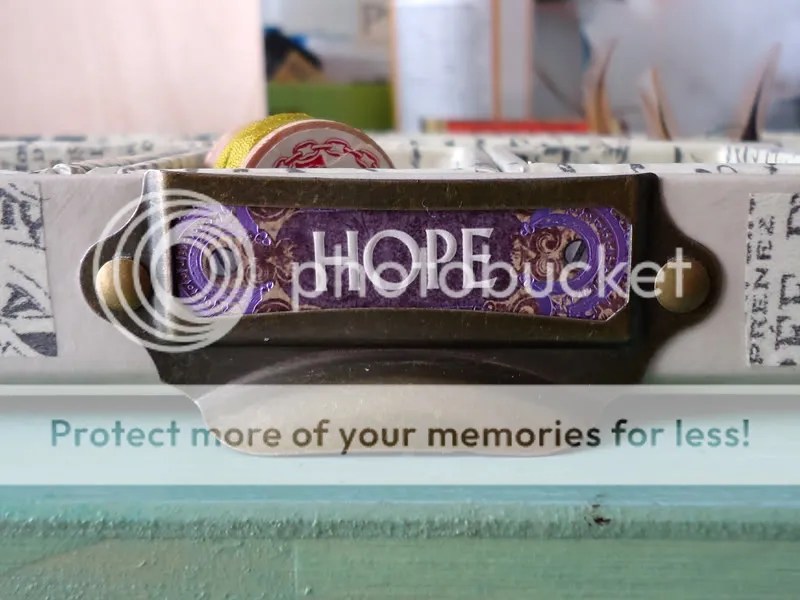
When I set out to make a birthday gift earlier this month for one of my dearest friends, I thought a lot about the items I have collected and what they mean to me. She is also a lover of history who understands how a connection to the past can give you steadier feet in the present. We have both had our share of challenges recently and discovered that there is great faith and hope to be found in the midst of pain and loss. I set out to build her a collection of items that symbolize hope to me, then give them words — a sort of visual and spiritual scavenger hunt.

tray04

The container itself is a printer’s tray, sometimes also called a specimen tray, depending on whether you lean more toward bibliophile or biologist. I filled it with the kinds of things I think someone might make and collect over a lifetime, a very personalized sort of natural history museum: rocks and feathers, shells and dried flowers, bits of embroidery and handmade paper snowflakes.

tray05

Underneath each smaller box is a Bible verse that links directly to the item above, so that each little compartment hides a secret message of encouragement. My hope is that after reading the verses a few times, just seeing the pieces of the collection will be enough to call to mind the words behind them.

tray07

tray06

tray08

The most challenging task in the whole project was covering each of the 21 inner boxes, ranging in size from 1-1/2″ squares to 3″x6″ rectangles, with a half dozen layers of tissue paper, cardstock, and sealant. The vintage text and rich green, purple, and mustard are much more visually appealing to me than its original gray craft paper covering. It was detailed, time-consuming work, but it gave me plenty of time to plan the contents and verses. As is often the way with this kind of artwork, I was definitely blessed and encouraged myself by the process of creating it.

tray09

Beef and Sweet Potato Tagine

Tags

, , , , , , , , , ,

tagine1

Days after this recipe is cooked and devoured, I can still detect the sweet, exotic scent of a Moroccan spice bazaar in my kitchen. Tagine refers to both the North African stew itself and the vessel in which it is traditionally cooked, a triangular-domed ceramic dish that allows steam to circulate and tenderize heavily spiced chunks of meat and vegetables. Fortunately, a modern metal Dutch oven or stock pot will serve just as well, and your stove-top will stand in nicely (if less romantically) for burying it in a heap of burning coals.

This recipe requires a bit of planning ahead since the meat marinates overnight before cooking. It is well worth the extra day. The spice rub recipe makes more than you’ll need for one tagine, and I like to keep some on hand in my spice cabinet. It is fragrant and flavorful in the extreme, and in addition to the traditional stew, I find it makes a beautiful roasting seasoning for chicken or lamb; it also plays well with almost any root vegetable, from potatoes to parsnips. I chose the ingredients based on multiple authentic Moroccan sources, but the ratios and recipe are my own, so feel free to adjust it to suit your own palate and desire for heat.

Moroccans speak both French and Arabic, so bon appetit and bil-hanā’ wa ash-shifā’. (translation: “May you have your meal with gladness and health.” :)

tagine2

Beef and Sweet Potato Tagine
makes 3/4 c. spice rub and six generous servings of stew

For spice rub:
2 Tbsp. smoked paprika
1/2-1 tsp. ground cayenne pepper (adjust as desired)
1 good pinch saffron (see Recipe Notes below)
1 Tbsp. garlic powder
1 tsp. ground allspice
1 Tbsp. ground cinnamon
1 1/2 tsp. ground cumin
1 tsp. ground turmeric
1/2 tsp. ground cloves
1 1/2 tsp. ground cardamom
2 1/2 tsp. ground coriander
1 1/2 tsp. ground ginger
2 Tbsp. kosher or coarse sea salt

For tagine:
2 lbs. top round or round tip beef roast, cut into rough 1″ cubes
1/4 c. + 1 Tbsp. tagine spice rub
4 Tbsp. olive oil, divided
2 small yellow onions, roughly chopped
3 large sweet potatoes, cut into 1″ chunks
1 bunch chard, stems removed and finely chopped, leaves roughly chopped
3 cloves garlic, minced
2 Tbsp. minced fresh ginger (a thumb-sized piece)
1/4 c. tomato paste
juice of one small lemon
3 c. chicken or beef stock or mushroom broth
1 Tbsp. honey
1 Tbsp. kosher or coarse sea salt

To serve:
naan or other flatbread
chopped cilantro
your favorite chutney
plain Greek yogurt
couscous (tiny pearls of pasta)

In large zip-sealed bag, place beef cubes, 1/4 c. tagine spice rub, and 3 Tbsp. olive oil. Seal and mix well, until beef is evenly coated with oil and spices. Refrigerate at least overnight, ideally a full 24 hours.

When ready to cook, heat 1 Tbsp. olive oil over medium-high heat in large Dutch oven or stock pot. Brown beef in three batches, about 5-6 minutes each, and remove to plate and set aside. If you try to brown it all at once, it will just steam instead of caramelizing. Also, you may need to add another glug of olive oil at the start of each batch if you bought very lean meat. If the bottom of the pan is brown at the end of this stage, no worries, that’s just flavor. If it’s perilously black, that’s burned spices, and you need to give it a rinse before moving on to the next step. (This is one of the drawbacks of using a modern pot instead of a ceramic tagine.)

Once beef is finished and removed to rest, add onions and chard stems to oil already in pot and cook two minutes, then stir in ginger and garlic. Add sweet potatoes and stir, then add tomato paste, lemon juice, stock/broth, honey, extra 1 Tbsp. spice rub, and salt. Add back in browned beef, stir well, and bring to simmer. Then reduce heat to low and cook, covered, for one hour, stirring occasionally. Add chard leaves and cook 20-30 minutes more.

Like most soups and stews, the final cooking time will change depending on the water and fat content of your ingredients. It may be done now, or it may need a few more minutes. It is finished when the beef is meltingly tender, sweet potatoes have almost completely disappeared, and gravy is thick and flavorful. Taste for seasoning and adjust as needed, then serve.

I serve my tagine over couscous, topped with plain Greek yogurt and chopped cilantro, with ginger-peach chutney and naan on the side. This is even better the next day, though it seldom lasts that long around here. Recipe is easily doubled or even tripled, just brown meat in more batches and extend cooking time extra half hour (or more as needed) before adding chard. This is a crowd-pleaser, even when the crowd consists of children and folks who usually like milder flavors.

Recipe Notes + Tips:
Saffron definitely comes under the heading of, “Who would think of eating that!?” but I am awfully glad someone was more imaginative than I. Saffron is the dried stamen of a crocus flower native to Southwest Asia and is also grown in a few regions around the Mediterranean Sea. It lends food a delicious nutty flavor I love, plus a brilliant, bursting yellow that appeals to my artist’s eye.

Saffron is cultivated and harvested entirely by hand, in a carefully timed, delicate process. It is quite expensive as a result, but a tiny pinch is enough to season several pounds of meat, vegetables, or grains. I buy coupe-grade Spanish saffron on-line from The Spice House, as I do everything else in my spice cabinet; I find their quality and value unmatched. Saffron is definitely a splurge, but it is a beautiful addition to any pantry. (If you don’t have/want any on hand, you can substitute 2 tsp. ground turmeric for the saffron in the tagine spice rub recipe. It will mimic the color and provide a little extra flavor boost.)

tagine3

Trash to Treasure

Tags

, , , , , , , , , , ,

curlermain

The amount of daily junkmail that finds its way to our mailbox is unfathomable to me, and whether I toss it in the trash or recycling bin, I still always feel a twinge of regret. Paper is one of my favorite things, and it seems so wrong to have pages and pages of the stuff pass through my hands for mere moments before being relegated to the incinerator. It’s not the trees’ fault that coupons for carpet cleaning and sports bars landed at the home of someone with laminate floors and food allergies.

Enter my recycling bin’s new best friend, Trash Origami: 25 Paper Folding Projects Reusing Everyday Materials by Michael G. LaFosse. I love this book because it gives me a creative, fun way to make use of life’s flotsam, and it was clearly written by someone who cares that his reader succeeds. The instructions are clear and well-diagrammed, and unlike many origami books, there are full-color pictures of every project so you know exactly what you’re working toward. Even better, the book includes a DVD that shows an artist folding all of the projects, so you are virtually guaranteed to be able to finish what you start.

Photobucket

There is a great deal of flexibility in terms of materials, although some projects ask for a specific type of paper recyclable, i.e. candy wrappers, potato chip bags, or magazine subscription cards. Paper and nimble fingers are really all that’s required, although a ruler and sharp cutting tool are handy for trimming paper as needed. I also use a bone folder, a tool used to press down and get good, strong creases. (And, yes, it is actually made of bone. You can handle that three ways: revel in holding a tool originally conceived thousands of years ago; celebrate the macabre, gothic nature of crafting art with a bone; or just ignore it and pretend it’s plastic. ;)

curlerball10

As a book-lover, I am ashamed to admit that the first thing I usually do after purchasing a hardcover book is toss the dust jacket. (At least for books in the studio — my cookbooks need all the protection they can get. :) In the spirit of Trash Origami, I decided to make my first project out of the book’s dust jacket instead of throwing it away; in a further boost to the existentialist symmetry of the thing, I chose the craft pictured on the cover, a Curler Ball.

curlerball09

After cutting the dust jacket into a dozen 4″-squares, I folded and curled each according to the directions. Each of those twelve units was then linked by the curls to make four larger units, then those four were linked again to make the finished curled paper sphere. The final assembly step gave me pause, but with the help of the book’s illustrations and a little experimentation, I got it. I am utterly fascinated by how such a detailed structure can be formed without any cutting or adhesive.

curlerball11

The Curler Ball is one of the most complex projects in the book and took about an hour start-to-finish, but others are accomplished in a few minutes, so it’s all about what items and time you have available. Trash Origami is accessible for any age, although very young children will obviously need a helping hand. Paper folding is a great trick to have up your sleeve for any unexpected wait (with or without kids), whether it’s in a restaurant reception area or the doctor’s office. Add to that the ability to work with the lunch receipt from your pocket or the month-old grocery list at the bottom of your purse, and you’ve got a real winner.

I am a complete documentary geek, so I cannot write about origami without mentioning the film Between the Folds, especially since one of the movie’s featured artists also contributed projects to Trash Origami. My family and I were as riveted by the film’s amazing creations and the art and science behind them as we were by the interviews with the offbeat, genius paper-folders who made them. Beyond the Folds is available to rent and stream on Netflix, and after seeing the potential that paper holds, it’s impossible not to want to dive in yourself. You can find out more and see excerpts at the film’s web site.

curlerball04

Shiny

Tags

, , , , , , , , ,

bling05

My work in the studio is often solitary and focused, and I really crave that kind of restorative, contemplative alone-time. However, I think art takes on a whole new, wonderful dimension when you make it with someone else. A dear friend and I made a batch of these fancy little fellas together, and we had such a good time doing it. When you make art with friends, not only do you get to share in each other’s inspiration, it’s also a lot of fun to see how different people use identical materials to make a completely unique set of choices, discoveries, and finished products. (not to mention our highly individualized mistakes and messes :)

bling08

For me, part of the appeal of this project is pairing substantial, earthy river rock and ethereal, barely-there sheets of shiny silver leaf. I love contrast: my favorite snacks are all salty-sweet, and I am drawn to color combinations like pale sky blue and deep red, or soft pink and bright chartreuse green. I find instant allure in these small, simple pieces of art that carry such weighty messages.

bling04

I made about a dozen rocks with my favorite inspirational words and phrases, then a few with only single initials as gifts for friends. While I usually gravitate toward more detailed, time-consuming artwork, there is a lot to be said for this kind of straightforward project. It requires only a handful of items, is easily transported, and lends itself to being crafted in stages as time allows. If you yearn for a little instant gratification, it is also easily do-able in a single sitting.

bling07

The items needed are all readily purchased at your local craft store or on-line. I used a bag of large, polished river rocks; Mona Lisa brand silver leaf sheets, adhesive size, and sealant; and a few sheets of letter rub-ons and stickers. The only other requirements are a pair of small paintbrushes and a work surface that can stand up to all the silver leaf dust you’ll create by the end. I personally consider a project extra successful when I finish looking like I was caught in a tiny silver snowstorm, but if you feel differently, you might add a tablecloth and art smock to your project materials list. ;)

bling06

Lamb Ragout

Tags

, , , , , , , ,

ragu1

When the bad cold going around here caught up with me, I knew exactly what I wanted. This lamb ragout is my ultimate comfort food. The deep, rich flavor of caramelized onions pairs beautifully with savory lamb and lentils and the tang of tomato. If you’ve never tried lamb before (or have but didn’t enjoy it), this is a great place to start. Ground lamb is sweeter and more tender than ground beef, but otherwise it cooks similarly; I much prefer lamb for both flavor and texture in this recipe. I serve mine over buttered basmati rice and sprinkled with tiny cubes of Cotswald, a soft, sharp cheddar flavored with garlic and green onions.

This recipe begins with caramelizing several onions, a simple process that makes the most of their natural sweetness. If you have the time and inclination, make a double batch and store the rest in a jar in the refrigerator for later use. Caramelized onions are one of those transforming ingredients that add a whole new level of complexity and flavor to any sauce, soup, or stew. You can also add a little extra sugar and vinegar and continue to cook down until the mixture condenses into velvety caramelized onion jam. Your grilled cheese sandwiches will thank you. :)

ragoutonions

Lamb Ragout
makes about 4 cups

For caramelized onions:
3 onions, cut in half and then sliced 1/4″-thick
2 Tbsp. olive oil, extra virgin if you have it
1 Tbsp. unsalted butter
1/2 tsp. granulated sugar
1 tsp. kosher or coarse sea salt
1 tsp. balsamic or seasoned rice vinegar

For ragout:
caramelized onions from above
3 cloves garlic, minced
1 1/2 lbs. ground lamb
1 1/2 tsp. kosher or coarse sea salt
1/2 tsp. freshly ground black pepper
1 tsp. dried thyme
2 tsp. dried basil
1/2 tsp. cracked brown mustard seed
1 dried bay leaf or 1/2 tsp ground dried bay leaf
1/2 tsp. ground dried rosemary or 2 tsp. finely chopped fresh rosemary (see Recipe Notes below)
15 oz. can diced tomatoes, undrained (I like fire-roasted)
1/4 c. tomato paste
3 c. mushroom broth or beef stock
1 Tbsp. seasoned rice vinegar or 2 tsp. balsamic
2 tsp. granulated sugar
1/2 c. red lentils

To caramelize onions, place oil and butter in saute pan over medium heat. Add onions and cook for 2-3 minutes, until turning translucent, then add salt and sugar. Mix well and cook over medium heat for 25-30 minutes, stirring occasionally. If onions begin to crisp or brown too quickly, reduce heat to medium-low. Long, slow cooking is the key to good caramelization.

When onions are deep brown and reduced in volume by half, add vinegar to finish and stir well. Turn heat up to medium-high and crumble in ground lamb. Stir well, then add salt, pepper, thyme, basil, mustard seed, bay, and rosemary. Cook, stirring occasionally, until lamb is evenly browned. Drain lamb and onions well, then add remaining ingredients. Stir and simmer 25-30 minutes, until lentils are tender and ragout has thickened. Taste for seasoning and add salt and pepper if needed. Serve over buttered long-grain rice and topped with your favorite cheese.

Recipe Notes + Tips:
Okay, oddball ingredient #12: ground dried rosemary. I love the fresh, woodsy flavor of rosemary, but I do not enjoy the sensation of eating a Christmas tree. Discovering the Spice House’s ground dried rosemary was one of the biggest light-bulb moments of my culinary life. Say good-bye to the days of tough, pointy rosemary needles and hello to smooth, almost-minty rosemary flavor. I use this stuff on everything from roast chicken to grilled salmon, zucchini to beets. Definitely one of my pantry must-haves.

ragu2

(I know broccoli isn’t on everyone’s comfort food list, but it is one of my favorite vegetables, and I couldn’t resist a picture with it on the plate. Just try to appreciate its green-ness for a moment, even if you don’t want to eat it. ;)