• Make
  • Cook
  • Read
  • Think
  • My Story

created for joy

~ make today

created for joy

Category Archives: Cook

Meyer Lemon Curd

28 Monday Nov 2011

Posted by createdforjoy in Cook

≈ 6 Comments

Tags

butter, cook, dessert, lemon curd, meringue, meyer lemon, pavlova

lemons meyerzest butter
lemoncurd

I don’t think the name “lemon curd” does justice to this rich, buttery custard; it is the perfect blend of velvety sweetness and citrus tang. This time of year, I like to make it with Meyer lemons, a hybrid cross of lemons and oranges that results in a juicier, more flavorful fruit. Lemon curd is a true culinary multi-tasker and can be used as a filling in tarts and cookies or as a topping on ice cream, meringue, or pancakes. A dollop instantly transforms gingerbread or vanilla pound cake. And in the midst of winter, you can’t go wrong with the gift of a bright yellow jar of lemony sunshine.

Meyer Lemon Curd
Makes about 1 3/4 cups

Zest and juice of 3-4 Meyer lemons (can substitute regular lemons if Meyer unavailable),
about 1/2 c. juice and 2 Tbsp. zest
1 c. granulated sugar
1/4 tsp. fine salt
6 large egg yolks
1/2 c. cold unsalted butter (1 stick), cut into tablespoon-size pats

Whisk zest, juice, sugar, salt, and egg yolks in medium saucepan until smooth. Bring to simmer over medium heat, whisking constantly. Continue to whisk and cook 10-12 minutes more until thickened to a custard-like consistency. Strain through a fine sieve into a bowl, then whisk in butter a pat or two at a time, until all butter is melted and incorporated into the thick, glossy curd. Store in a wide-mouth pint mason jar or other airtight container; keeps in refrigerator up to two weeks.

pavlovamain

Since making lemon curd leaves you with a passel of unused egg whites, it only seems logical to make a pavlova, as I did last week for a dear friend’s Thanksgiving birthday. A pavlova is layers of whipped cream, custard or fruit curd, and meringue; in this case, it’s Meyer lemon curd and a vanilla-scented meringue with a crispy exterior and marshmallow-chewy interior. Consider this post a two-fer. :)

Pavlova Meringue
serves 8-10

4 egg whites
1 1/4 c. granulated sugar
2 tsp. vanilla bean paste or real vanilla extract

Preheat oven 300F. Place egg whites and sugar in bowl of electric mixer and mix on highest speed until glossy white and forming stiff peaks (about 5 minutes). It may be slightly grainy, but if you see lots of undissolved sugar, continue whisking until more incorporated. Add vanilla and whisk until thoroughly combined.

Spread the meringue on a parchment-lined baking sheet using a silicon spatula. I try for an oval, but part of pavlova’s charm is its imprecision. Bake the meringue for about 1 hour, until an even pale brown with the beginning of cracks around the edges. (It will crack a bit more while it cools — that’s okay.)

To serve, break off a wedge of completely cooled meringue and layer on a tablespoon or two of lemon curd and a generous spoonful of lightly sweetened whipped cream. (I like 1 c. heavy cream + 1 Tbsp. vanilla sugar or regular granulated sugar, whisked until it holds soft, cloudy peaks.)

Note: Meringues cook best in cooler, dry weather, so if it’s hot and humid, consider a lemon tart instead.

meringue

Turkey Stock

22 Tuesday Nov 2011

Posted by createdforjoy in Cook

≈ Leave a comment

Tags

allspice, cook, herbs, orange, recipe, Thanksgiving, turkey stock

yum

It stands to reason that I would love Thanksgiving: I love to cook, I love to have family and friends over, and I have an awful lot to be thankful for. Right now my kitchen smells like Thanksgiving heaven, redolent with smoky turkey, onion and celery, sage and thyme, orange and allspice. My children firmly believe we would make millions if we could just figure out how to capture the smell of turkey stock in candle form.

If you’ve never made homemade stock before, now is the time to try it. You are virtually guaranteed to have access to a turkey in the days ahead, and even if you didn’t cook it yourself, most hosts are happy (if slightly amused) to send their guests home with a carcass care package. Cooking stock is surprisingly simple and makes sense both ethically and economically because you’re getting the most you can out of the animal. I also find it’s a great way to use fruit and veggies that are a bit past their prime; our stock this year includes a few old apples and a rutabaga that were rolling around unwanted in the produce drawer.

The recipe below makes several scented, savory quarts, perfect for soup, stew, and pot pie. It will keep for a week or two in the refrigerator or a few months in the freezer. Feel free to change the seasonings or vegetables to suit your palate and pantry.

Turkey Day Stock
Makes about 5 quarts

1 turkey carcass, including bones, skin, and leftover meat (I use a smoked turkey for Thanksgiving stock)
2 large yellow onions, peeled and cut into quarters
8 carrots, unpeeled and cut/broken in half
4 parsnips, unpeeled and cut into thirds
1 bunch celery (about 10 stalks, no leaves), broken/cut into halves
zest and juice of 2 oranges
1 Tbsp. + 1 tsp. whole allspice berries
1 Tbsp. + 1 tsp. crushed brown mustard seed
4 sprigs fresh rosemary
4 sprigs fresh sage
6 sprigs fresh thyme
3 Tbsp. coarse sea salt
1-1/2 Tbsp. whole black peppercorns

Put all the ingredients in your largest stockpot (must hold at least 8 quarts) and cover with water. Simmer uncovered over medium heat for several hours. When liquid reduces by half, fill with water again and simmer for one hour more.

Strain hot stock into large bowl or second pot. To store in refrigerator for use in next two weeks, fill sterilized quart-size mason jars with hot stock, leaving 3/4″ space at top of jar. Put on fresh lids and allow to sit out on counter until you hear the pop of each lid sealing, then refrigerate. (Steam will seal jars well enough to buy you extra time in the fridge.) If you prefer to freeze your stock, allow it to cool completely, then place in quart-size Ziploc freezer bags labeled with date; freeze up to three months.

(If you figure out that whole candle thing, let me know. :)

Easy Homemade Bread (Really)

19 Saturday Nov 2011

Posted by createdforjoy in Cook, Read

≈ 1 Comment

Tags

artisan, bread, cook, easy, homemade

smsandwich

I have a confession: I have murdered so many sourdough starters that I’ve lost count. This is especially sad because I love everything about baking bread — the scent of yeast, the smooth elasticity of kneaded dough, a slice of warm, buttered bread fresh from the oven… honestly, that’s my idea of romance. There is something so satisfyingly wholesome about turning flour, water, salt, and yeast into nourishment to eat and share.

In the past, my well-intentioned resolve to bake bread from scratch has lasted for whole days at a time before real life intervened. I tried again and again, leaving piles of breadcrumbs and jars of century-old starter in my wake. I burned out an electric stand mixer on a batch of leaden whole wheat. I dabbled in bread machines, but I could never quite accept the notion of “homemade” bread that I hadn’t actually touched until each oddly-shaped loaf emerged from its little metal case. Then in 2008, I fractured two vertebrae and a rib while kneading bread dough (my first hint that I had osteoporosis). I don’t give up easily, but even I was a wee bit discouraged after that.

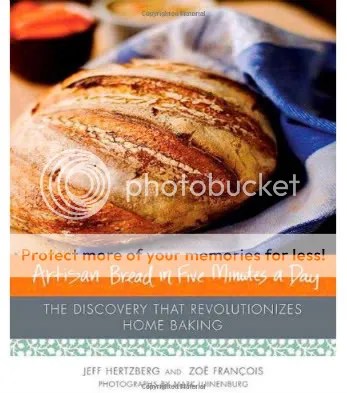
So when a dear foodie friend of mine recommended a book entitled Artisan Bread in Five Minutes a Day, I was skeptical. I’ve made recipes that required more time than that just to proof the yeast, and don’t even get me started on kneading, resting, and rising. But I borrowed his copy, and as I read it, I started to believe it was actually possible. Then I set a timer and made the first batch of dough: four loaves’ worth was rising on the counter before my five minutes were up. When the first loaf came out of the oven looking like something from a bakery in Provence, I was impressed; then my family polished it off in about the same amount of time it took to make it. Only contented sighs and a few smears of butter on the counter proved it ever existed, and I was happily converted to the ranks of Bakers of Bread.

Artisan Bread in Five Minutes a Day was written by a chemist and a pastry chef, and through an extensive research process, they whittled down making bread to its essential steps. There is no proofing, no kneading, and no second rising phase. A recipe makes enough for four 1-lb. loaves, so you can enjoy fresh bread every day, and it’s easy enough to make that both my kids (ages 11 and 14) can do it. The basic recipe for white bread is so tasty, it took me a long while to venture into other combinations, but everything I’ve tried in the cookbook is delicious. My most recent batch was Roasted Garlic Potato Bread, which I used to make open-face meatloaf sandwiches (a play on the traditional side of mashed potatoes) and Turkey BLT’s (pictured above). If you’re a would-be baker or have one in the family, this book is worth every penny. I’d love to hear how it goes if you try it out. :)

Photobucket

Chocolate Peanut Butter Cup Cookies

16 Wednesday Nov 2011

Posted by createdforjoy in Cook

≈ 3 Comments

Tags

chocolate, cook, cookies, Justin's Nut Butter, peanut butter, peanut butter cup

cookie1

Remember this?
Hey, you got peanut butter in my chocolate!
Hey, you got chocolate in my peanut butter!

Well, hey, I got peanut butter cups and chocolate in my peanut butter cookies, and I’ve never been happier. :)

Chocolate Peanut Butter Cup Cookies
Makes about 30 cookies

1 1/2 c. all-purpose flour (I prefer King Arthur)
1/2 c. unsweetened cocoa powder
1/2 tsp. baking soda
1/2 tsp. salt
1/2 c. granulated sugar
1/2 c. turbinado or demerara sugar (can substitute light brown sugar)
1/2 c. unsalted butter, softened (1 stick)
1/4 c. peanut butter (I use creamy Skippy Natural)
1 tsp. real vanilla extract or vanilla bean paste
1 large egg
2 Tbsp. water
1 1/2 c. chopped peanut butter cups (about 14 regular-size cups; I love Justin’s Organic Peanut Butter Cups, see Recipe Notes below)
coarse sugar for dusting cookie tops, optional

Preheat oven to 375F. In a medium-size bowl, whisk together flour, cocoa, baking soda, and salt; set aside. In another medium-sized mixing bowl, beat together butter, peanut butter, and sugars. Beat in vanilla, egg, and water until thoroughly mixed, then stir in dry ingredients. Once well-combined, stir in chopped peanut butter cups.

Scoop by rounded tablespoonfuls onto lightly greased or parchment paper-lined cookie sheet. Lightly press down tops of cookies with the back of a fork until flattened to about 1/2″ thick, and then sprinkle with coarse sugar if desired. Bake 7-9 minutes, until dough is set and your kitchen smells like chocolate. Cool on wire rack, but not completely — you have to try these while the peanut butter cups are still melted.

Recipe Notes + Tips:
I discovered Justin’s Nut Butters a few years ago. They are all-natural and scrumptious — Maple Almond Butter is my absolute favorite. Earlier this year, Justin’s debuted their Organic Peanut Butter Cups in milk and dark chocolate. They have half the sugar of Reese’s and much more flavor. They also have about double the chocolate, which automatically earns them brownie points with me. (I mean my “brownie points” very literally. :)

This recipe is my version of one from the King Arthur Flour web site. The original called for mini peanut butter cups, available here. They’re super cute but not all-natural, so not an option for me. If you try them out, let me know how it goes.

cookie2

Ham and Chard Tart

11 Friday Nov 2011

Posted by createdforjoy in Cook

≈ Leave a comment

Tags

autumn, chard, cheese, cook, ham, mustard seed, tart

tartmain

Want a great way to get more greens in your diet? Try a piece of this savory, cheesy tart — you won’t even notice all the vitamins sneaking in. This recipe won’t earn you any points if you’re supposed to be sticking to a low-cholesterol diet, but if you give a slice to your cardiologist, you’ll have a friend for life. (That’s planning ahead. :)

Ham and Chard Tart
Makes 12″x15″ tart, 8 generous servings

2 Tbsp. olive oil
1 jumbo red onion, peeled and chopped
1 clove garlic, minced
1 large bunch chard (about 12 oz.), washed and roughly chopped
1 tsp. dried thyme
1 tsp. dried basil
1/2 tsp. dried marjoram (or Major Ram, as we call it in my house)
1/2 tsp. cracked brown mustard seed (optional, see Recipe Notes below)
1/2 tsp. freshly ground black pepper
2 1/2 tsp. coarse sea salt (or to taste, use 1-1/2 tsp. if using bacon)
1/8 tsp. fresh grated nutmeg (optional, but trust me)
2 c. creme fraiche (if not available, substitute all-natural sour cream)
5 oz. freshly grated Parmesan (or any hard, aged cheese)
3 large eggs
8 oz. ham or cooked bacon, roughly chopped
Your favorite pie crust dough, enough for two 9″ crusts (I like this recipe from King Arthur Flour or Immaculate Baking Co.’s refrigerated pie crust dough)
12″x15″x1″-deep baking sheet

Roll pie crust dough into rectangle roughly 13″x16″ and place in lightly buttered baking sheet. (Quick tip: I find it much easier to roll my pastry out between two sheets of parchment paper.) Pinch edges to form a small lip, prick bottom of pastry all over with fork (to keep it from bubbling up during baking), and place crust in freezer for 30 minutes. This step chills the fat in your pastry dough and makes for an extra tender, flaky crust.

Preheat oven to 375F. While tart crust is in the freezer, heat olive oil in saute pan over medium heat, then add onions. Cook 7-8 minutes, until onions are translucent but not browned. Add garlic and stir, then chopped chard. You may need to add it in batches and allow it to wilt before adding more so that it will all fit in your pan. Turn up heat to medium-high and cook, stirring occasionally, for 1-2 minutes, then add 1 tsp. of the coarse sea salt and the thyme, basil, marjoram, and mustard seed. Stir well and allow to cook for 5-6 minutes more, or until chard and onions are tender. Turn off heat and set aside.

Place chilled tart crust in oven and bake for 7-8 minutes, just until golden. (This keeps the crust from getting soggy later.) While it’s baking, get out a mixing bowl and whisk together the eggs, creme fraiche, remaining salt, pepper, nutmeg, and 4 oz. of the cheese. When tart crust comes out of the oven, spread cooked chard and onion mixture across bottom evenly. Sprinkle over chopped ham/bacon, then pour over egg mixture — it will be full, but it will fit, I promise. Sprinkle remaining ounce of grated cheese over top of tart. You can also add another few shakes of dried thyme if you’re feeling artistic. Bake for 20 minutes, until golden brown and the filling is bubbly.

Let the tart cool and filling set up for about 10-15 minutes, then cut into squares. I like this served with a simple side salad of mixed greens or spinach dressed with a little olive oil, salt, pepper, and a generous squeeze of lemon juice. It needs a little acid on the side to compliment the richness of the tart. (Plus that’s more greens — yay, you!)

Recipe Notes + Tips:
Once again I task you with obtaining an unusual ingredient, and once again I guarantee it’s worth it! :) I first discovered brown mustard seed when I started experimenting with Indian cooking, and it quickly became a favorite ingredient of mine across the board. Just a little gives dishes savory, nutty depth. I love it with anything cheesy, veggies of all sorts, and roasted chicken, beef, and salmon. I never make a batch of stock without it, and it works in just about any soup or stew.

I buy crushed brown mustard seed on-line from the Spice House, and they are hands-down my favorite source of spices and herbs. Their prices are often better than the grocery store, and their products are always superior.

This recipe is an adaptation of the Italian Ham and Spinach Tart from Jamie Oliver’s 2007 cookbook, Jamie At Home. You won’t find a better guide to seasonal cooking, and I’ve made just about everything in the book with wonderful results. If you’re looking for formal, precise cooking instructions, he may not be your man, but I personally enjoy directions like “preheat your oven to full whack” and “put a glug of oil in the pan.” :)

tartmain2

Apple Butter Cupcakes with Caramel Frosting

06 Sunday Nov 2011

Posted by createdforjoy in Cook

≈ 3 Comments

Tags

apple, autumn, caramel, cook, cupcake, dessert

cupcakesm02 cupcakesm01 cupcakesm03
cupcakemain

These sweet, spicy treats are a wonderful way to celebrate autumn. I originally conceived this recipe for a friend’s Rosh Hashanah festivities; the cupcakes are a play on the traditional apple slices and honey served to mark the Jewish New Year. I kept fiddling with it until it became the final recipe below, just right for my grandmother’s November birthday. The cake recipe is my own, the frosting an adaptation of one found on the King Arthur Flour web site. It is sugary, warm, and beautifully flecked with vanilla bean.

This recipe may call for a few ingredients you don’t have in your pantry. Please don’t let that stop you — I’ve provided substitutions for each if you don’t have or can’t find the originals, and the recipe notes explain more. If you feel adventurous, I’d encourage you to try one or two that are new to you, though. Some of my favorite current cooking staples are items I’d never even seen a few years ago. If you never try, you’ll never know… Help me be more adventurous too: I’d love to hear about your favorite oddball ingredient or food discovery. :)

Apple Butter Cupcakes with Caramel Frosting
makes 18 cupcakes

For cake:
1 3/4 c. all-purpose flour (I prefer King Arthur)
1 1/2 tsp. baking powder
1 tsp. baking soda
1/4 tsp. salt
1/4 tsp. ground ginger
1/2 tsp. ground allspice
1 tsp. ground cinnamon
1/2 c. unsalted butter (one stick), softened
1 c. sugar
2 eggs
1 c. apple butter (preferably juice-sweetened, no sugar added)
1 tsp. vanilla bean paste or real vanilla extract
3/4 c. creme fraiche or all-natural sour cream (see Recipe Notes below)

Preheat oven to 350F. Line muffin pan with paper or silicon liners. (Quick tip: spray insides of paper liners with non-stick spray for easier cake removal later.) In a small mixing bowl, whisk together flour, baking powder, baking soda, salt, and spices, then set aside. In a large mixing bowl, cream together butter and sugar with electric mixer until fluffy. Add egg, apple butter, and vanilla, then mix well; add creme fraiche and mix again. Finally, add flour mixture and beat on lower speed, just until evenly combined. Fill muffin cups 3/4 full (I use a large ice-cream scoop) and bake 20-25 minutes, until tester inserted in center comes out clean. Cool cupcakes on wire rack while making frosting.

For frosting:
5 Tbsp. unsalted butter
1/2 tsp. salt
1/2 c. turbinado sugar, also called demerara or raw sugar (or substitute brown sugar, see Recipe Notes below)
2 Tbsp. golden syrup or light corn syrup
3 Tbsp. milk
2 c. powdered sugar, sifted
1/2 tsp. vanilla bean paste or real vanilla extract
1/4 tsp. ground cinnamon
1/2 c. coarsely chopped pecans, optional

In a small saucepan, melt butter over medium heat, then stir in salt, turbinado sugar, and golden syrup. Cook and stir several minutes until sugar melts. Add the milk and turn up heat until mixture comes to a foamy, rolling boil for about 30 seconds. Pour caramel into mixing bowl and allow to cool for ten minutes. Stir in sifted powdered sugar, vanilla, and cinnamon and mix well until completely smooth. If frosting is too thin to spread, add another tablespoon or two of powdered sugar; it will thicken more as it cools. Spread generously on cupcakes while frosting is still warm, then top with chopped pecans if desired. There will be a little frosting left over to do with as you see fit. (I personally saw fit to eat it with a spoon. ;)

Recipe Notes + Tips:
If you’ve never tried creme fraiche, you’re missing out on a delicious, versatile ingredient. It is similar to sour cream, but sweeter and more buttery, with a thinner consistency. It plays well with both sweet and savory dishes, and I use it in everything from cupcakes, to omelets, to chicken enchiladas. If your grocery store doesn’t carry it, ask them to start — creme fraiche costs about the same as sour cream, but you get a much bigger bang for the buck. My favorite is from Vermont Creamery. If you can’t find creme fraiche, feel free to substitute all-natural sour cream or whole-fat plain Greek yogurt.

The Recipe Notes in my post for Peanut Butter Hot Fudge Sauce wax poetic about golden syrup. The other sweetener about which I feel passionately is turbinado sugar, also known as demerara or raw sugar. My initial decision to use turbinado sugar was born of necessity, but it didn’t take me long to fall in love.

Turbinado sugar is natural brown sugar. What the food industry calls “brown sugar” is actually a bizarre reconstruction of turbinado; it is made from further processed, bleached, granulated sugar with sulphured molasses added back to it in order to mimic raw sugar. In the process, brown sugar loses the caramelized, smoky warmth of turbinado sugar and gains sulfites, one of the most common sources of food allergies. Brown sugar is a classic example of food production practices instituted to best serve profit margins, rather than flavor or good health.

Turbinado sugar can easily be substituted for light brown sugar in any recipe without adjusting measurements. It is less moist and much coarser than brown sugar, so it stores better as a result. Turbinado does not melt as quickly as brown sugar because of its texture, so recipes like the frosting above require an extra minute or two cook-time for it to dissolve completely. I can detect a miniscule-but-pleasing sugary crunch in cookies made using turbinado instead of brown sugar, but it dissolves completely in cakes and muffins. If you don’t like that difference, look for raw sugar labelled “demerara,” as it is usually smaller-grained. If a recipe calls for dark brown sugar, simply add an extra tablespoon of unsulphured molasses per cup of raw sugar used.

Peanut Butter Hot Fudge Sauce

30 Sunday Oct 2011

Posted by createdforjoy in Cook

≈ 1 Comment

Tags

cook, dessert, golden syrup, hot fudge, peanut butter

peanut butter hot fudge sundae

In honor of all the little candy bars on shelves everywhere, I thought I’d make a batch of peanut butter hot fudge sundaes — not that anyone needs an excuse to make gooey chocolate goodness. This recipe makes enough hot fudge for about a dozen generous sundaes, and nothing says “good dinner party host” like sending home a jar with guests at meal’s end (much to my children’s chagrin). It’s a little dangerous how quickly and easily this comes together. Beware: from now on, you are only ten minutes away from peanut butter fudge heaven.

Peanut Butter Hot Fudge Sauce
Makes 3 cups

8 oz. heavy cream
9 oz. semi-sweet chocolate chips (about 2 c.)
3/4 c. creamy peanut butter (I use Skippy Natural)
1/4 c. Lyle’s Golden Syrup (or light corn syrup, see recipe notes below)
pinch fine salt

Cook ingredients in a saucepan over medium-high heat, stirring often, until everything is melted and combined into a smooth, glossy sauce. Serve while still warm with vanilla or coffee ice cream. Fair warning, you will want to lick the empty bowl. (I won’t tell if you do. :)

Recipe Notes + Tips:
I first tasted golden syrup when I lived in England during high school, but I credit British cookbook author Nigella Lawson with completing my happy conversion. (The recipe above is inspired by one featured in 2007’s Nigella Express.) Golden syrup is inverted sugar syrup with similar consistency, uses, and cost to light corn syrup, but with a deliciously warm, buttery flavor. Though Lyle’s Golden Syrup has been a British staple since 1883, it is now also widely available in the U.S. I have seen it at Whole Foods, World Market, Publix, and even T.J. Maxx. It is also available online from King Arthur Flour, among others.

Sweet Orange Scones

24 Monday Oct 2011

Posted by createdforjoy in Cook

≈ Leave a comment

Tags

citrus, cook, orange, scone, sweet, zest

flour mixture orange zest scone round
scone closeup

Scone purists, avert your eyes. :) This glazed scone recipe is more shortcake-pastry hybrid than anything traditionally found at a British cream tea. That said, it is also one of my favorites and a moist, delicious way to celebrate the entrance of winter citrus. I made up this recipe after I got a craving for Panera’s orange scones (off limits for me now because of food allergies), and I couldn’t be happier with the result. They’re like sunshine in your mouth.

Sweet Orange Scones
Makes 12 scones

For scones:
3 1/4 c. all-purpose flour (I prefer King Arthur Flour)
4 tsp. baking powder
3/4 tsp. fine salt
1/2 c. granulated sugar
zest of 1 orange, finely chopped
1/2 c. unsalted butter (one stick), softened
1 egg
1 tsp. real vanilla extract or vanilla bean paste (I am a vanilla bean paste devotee)
1 tsp. almond extract
1 c. buttermilk (or for quick sour milk replacement, see below)

Oven 400F (375F for dark-coated pan)
In medium mixing bowl, whisk together flour, baking powder, salt, sugar, and zest. Rub in butter with your fingers until mixture is soft and crumbly. I love the buttery orange scent at this stage.

In small mixing bowl, whisk together egg, vanilla and almond extracts, and buttermilk/sour milk. Add to dry mixture and mix well until combined into a sticky dough. (You may need to add an extra 1/4 c. flour if it’s very humid.) Spread dough into a lightly greased 9″-round cake pan. Bake 30-33 minutes, until golden brown and tester in center comes out clean. Cool five minutes, then turn out on to rack and flip again so it’s right-side up. While cooling, make glaze.

For glaze:
juice of 1/2 lemon
juice of 1 orange
zest of 1/2 orange, finely chopped
1/2 tsp. real vanilla extract or vanilla bean paste
1/4 tsp. almond extract
2 c. powdered sugar, sifted

Whisk together juices, zest, and extracts, then add powdered sugar. Whisk until smooth. Place cooled scone round on plate and cut into twelve wedges. Pour over glaze and refrigerate at least 1/2 hour before serving — this gives the glaze time to thicken and soak in to the edges of the scones… yum. If you use all the glaze, there will be a puddle on the plate that will sweeten the bottoms of the scones as well. I don’t see that as a problem, but to each her own. :) These just cry out for a glass of cold milk or a cup of hot Earl Gray tea.

*Quick sour milk: if you don’t have buttermilk on hand, as is often the case for me, you can substitute homemade sour milk. Just put the juice of a lemon or 1 tbsp. vinegar in a liquid measuring cup and add milk until it totals one cup. Stir briefly and let sit 1-2 minutes before using.

Recipe Notes + Tips:
It’s a little extra work to make fresh zest and juice, but it’s worth it. No matter the quality of your favorite commercial orange juice, it cannot compare to fresh-squeezed. Full disclosure: I never squeeze a dozen oranges before I have a glass of OJ with breakfast, I pour it out of a plastic container just like everyone else. But this recipe wouldn’t be the same without the fresh juice.

There is also no replacement for fresh citrus zest. Be sure to zest only the peel, not the bitter white pith. If you don’t have a citrus zester, you can use the smallest holes on your cheese grater; just scrape the inside of the grater with a silicone spatula when you’re done to get all of it.

I am an unashamed citrus zest hoarder — my family thinks nothing of finding naked fruit in the fridge, pre-zested and clothed only in plastic wrap. It makes me happy to know there are little bags of chopped lemon and orange peel in my freezer, waiting to be added to compound butter, roast chicken, soup, and stock. I say take comfort wherever you can get it. :)

Newer posts →
Follow created for joy on WordPress.com

Enter your email address to follow this blog and receive notifications of new posts by email.

Search

Recent Posts

  • Almond Butter and Jam Cookie Sandwiches
  • Bacon and Egg Breakfast Muffins
  • Loving the Kitchen
  • Creamy Chicken Noodles
  • Double Chip Molasses Oatmeal Cookies

Categories

  • Cook (48)
  • Easy-Peasy (3)
  • Make (37)
  • Read (24)
  • Think (20)

Archives

  • October 2013 (1)
  • March 2013 (1)
  • October 2012 (1)
  • August 2012 (6)
  • July 2012 (4)
  • June 2012 (7)
  • May 2012 (4)
  • April 2012 (6)
  • March 2012 (6)
  • February 2012 (9)
  • January 2012 (14)
  • December 2011 (15)
  • November 2011 (17)
  • October 2011 (6)

All original content © Spring Barnickle, Create Joy LLC, & createdforjoy.com, 2011-2014.

Feel free to link to createdforjoy.com or provide excerpts with clear credit and directions to original content; please ask before copying posts or pictures to your site or publication.

Create a free website or blog at WordPress.com.

Privacy & Cookies: This site uses cookies. By continuing to use this website, you agree to their use.
To find out more, including how to control cookies, see here: Cookie Policy
  • Subscribe Subscribed
    • created for joy
    • Join 96 other subscribers
    • Already have a WordPress.com account? Log in now.
    • created for joy
    • Subscribe Subscribed
    • Sign up
    • Log in
    • Report this content
    • View site in Reader
    • Manage subscriptions
    • Collapse this bar